App Store What’s New Text: What to Write
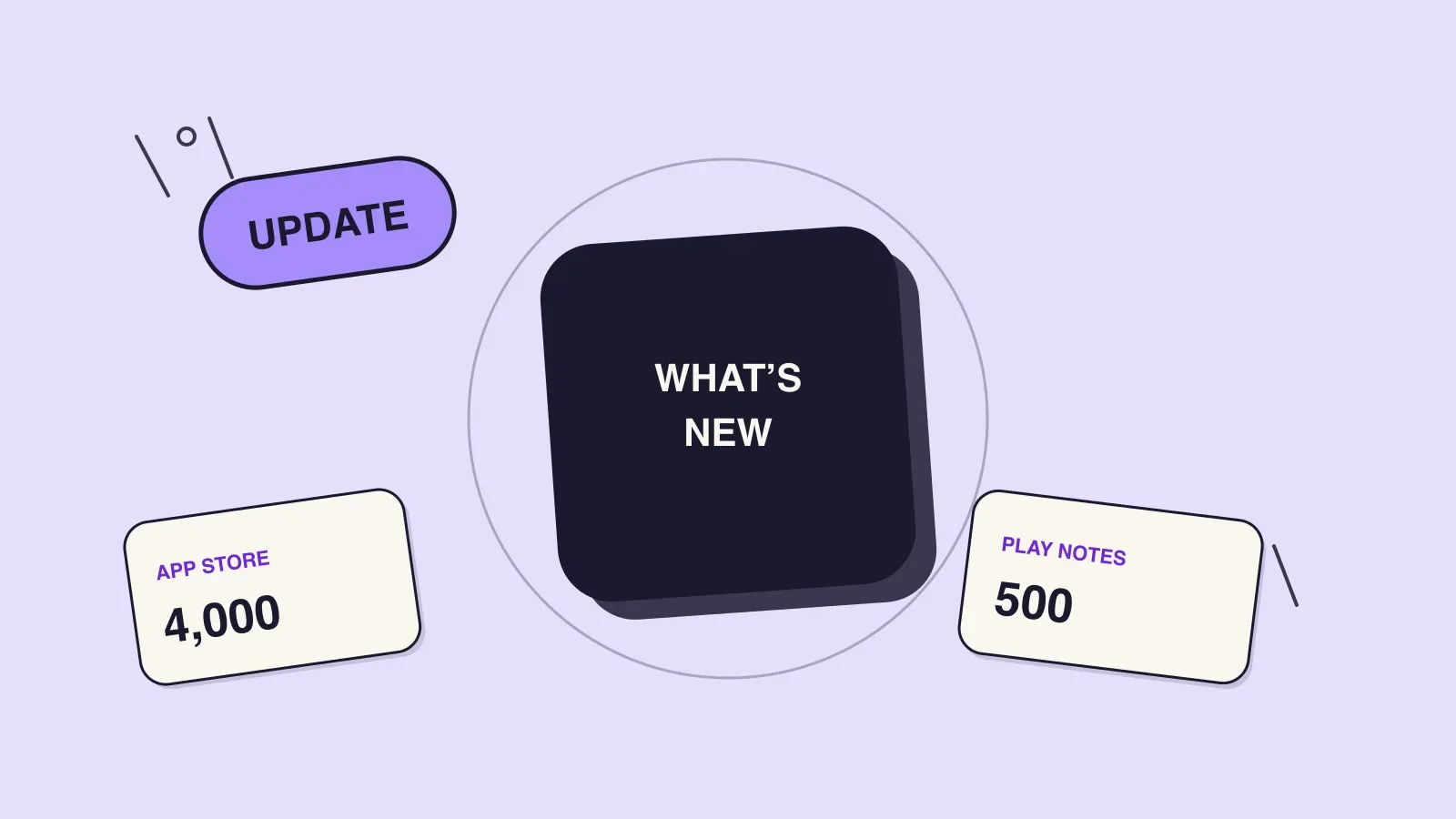
Apple gives you 4,000 characters and requires the field on every update. Play gives you 500. Neither box is a place to hide keywords.
Quick answer
What should App Store What’s New text say?
What’s New in this Version is up to 4,000 characters. It is not available on the first version of the app and is required on every update after that. It can be localized. Apple’s Guideline 2.3.12 says you must describe new features and product changes; a generic “bug fixes and performance improvements” line is only for updates that are actually just that. Google Play release notes are separate: 500 Unicode characters per language, and Play says not to use them for promotion.
- App Store What’s New: 4,000 characters, required after version 1
- Guideline 2.3.12: significant changes must be listed
- Promotional text is the 170-character field you can edit without a new version
- Google Play release notes: 500 Unicode characters per language
- If you announce a feature, the first screenshot should show it
On this page
What’s New is the text on the update, not the essay under your screenshots. Teams treat it as a chore, ship “bug fixes and performance improvements” on a version that redesigned the editor, and then wonder why App Review asks what changed. Apple already wrote the rule. The field is also 4,000 characters, which tempts people to paste the description into it. The description is evergreen. What’s New is this version.
Limits are in App Store Connect’s platform version information . The writing advice is on Creating your product page . The review rule is Guideline 2.3.12. Promotional text, the field you can change without a binary, is a different box — compared in promotional text vs description.
Apple’s 4,000 characters and Play’s 500
If you ship both stores, write the short version first. Play’s release notes cap at 500 Unicode characters per language. Apple’s What’s New caps at 4,000 and is required on every version after the first. A long iOS draft chopped down to 500 always reads chopped. A clear 500-character note can grow into an iOS note when the version actually has more to say.
| App Store What’s New | Google Play release notes | |
|---|---|---|
| Limit | 4,000 characters | 500 Unicode characters per language |
| First version | Not available | Optional; Play still wants users informed |
| Later versions | Required | Part of the release; tags per language |
| Localizable | Yes | Yes, inside language tags Play inserts |
| Promotion | Tell users what changed; Apple also allows a call to action | Do not use notes for promotion or to solicit user actions |
| Keyword stuffing | Not a search field. Name, subtitle, and keywords rank. | Not a keyword list. Metadata policy still applies. |
Write Play’s 500-character note first. Expand it for Apple only when the version has more than 500 characters of real changes. Do not paste the store description into either field.
When the generic line is allowed
“Bug fixes and performance improvements” is a legal note when that is the whole release. It is a 2.3.12 problem when you also shipped a new editor, a paywall, or a permission. List significant changes in order of importance. Apple’s product-page page says to mention features you added because of feedback, so people can see you listened, and to add a call to action that gets people to open the update.
| What you shipped | Note that fits | Note that fails |
|---|---|---|
| Crash fix only | Fixed a crash when opening a shared list offline. | A 4,000-character essay about your vision. |
| New receipt scanner | New: scan a receipt into a line item. Open an invoice and tap Scan. | Bug fixes and performance improvements. |
| Redesign plus two fixes | The editor is one screen now. Also fixed the Sunday reminder timezone. | Various improvements. |
Match the note to the binary. Generic text is for generic releases. A new feature has to be named, with enough detail that a person can find it.
Apple says this text appears on your product page and on the Updates tab. The people reading it already have the app, or they are deciding whether the update is worth the download. Lead with the change they will notice in the first minute. Leave the company story in the description.
What’s New is not promotional text
Promotional text is 170 characters. You can edit it without submitting a new version. Apple says it does not affect search ranking. What’s New ships with the version. You cannot use it as a sticky note for a weekend sale, because changing it means another version. Use promotional text for “Student week ends Sunday.” Use What’s New for “Shared lists are in this build, under the list menu.”
The evergreen page is the description, covered in how to write an App Store description. If the product’s job changed, update that field on the same version. If only this week’s news changed, leave the description alone and edit promotional text.
Play’s language tags
Play Console puts language tags in the release-notes box for each language the app supports. Notes go between the tags, and the tags sit on their own lines. The cap is 500 Unicode characters per language, so an emoji is a character, not a free decoration. Play’s instruction is to inform users about recent updates, and not to use the notes for promotional purposes or to solicit user actions. “Please rate us 5 stars” belongs in neither store’s update text.
<en-US>
Scan a receipt into an invoice line. Open an invoice and tap Scan.
</en-US>
<de-DE>
Beleg scannen und als Rechnungsposition übernehmen. Rechnung öffnen, dann Scannen tippen.
</de-DE>If the note names a screen, reshoot that screen
Search visitors still meet the first three screenshots before they meet What’s New. If this version’s reason to update is a scanner, frame one should be the scanner, not the splash you uploaded in March. Cadence is in how often to refresh App Store screenshots. The first-frame test is in the first three screenshots.
Use a few lines, not the whole 4,000
The limit is a ceiling. Updates are read in a list, often on a phone, often by someone who already trusts you enough to have the app installed. Three specific lines beat a changelog pasted from Git. Save the 4,000 for a version that actually changed the product in ways a person has to relearn.
| Release | A note that is long enough |
|---|---|
| One crash fix | Fixed a crash when opening a shared list offline. |
| One feature | New: scan a receipt into an invoice line. Open an invoice and tap Scan. |
| Feature plus fix | Shared lists are in this build, under the list menu. Also fixed the Sunday reminder timezone. |
Stop when the reader knows what changed and where to find it. Do not pad to 4,000. On Play, the same notes still have to fit in 500 Unicode characters per language.
Write What’s New for both stores
Do this from the changelog, not from the marketing doc. If a line is not in the binary, it does not go in the note.
List only what this binary changed
Features, fixes, and permission changes. Drop internal refactors the user cannot see.
Draft the 500-character Play note
One to three specific lines, most important first. No sale, no star request. Translate inside each language tag, and recount Unicode characters per language.
Expand for Apple only if there is more to say
Add the “where to tap” detail and, if Apple’s product-page guidance fits, a plain call to action. Stay under 4,000. Localize the locales you actually support.
Check 2.3.12 against the binary
If a significant change is missing from the note, add it. If the note is generic, confirm the binary is generic too.
Match screenshot one to the top line
If the top line is a new feature, the first screenshot should show that feature before you submit.
What’s New questions
Is What’s New required on the first App Store release?
No. App Store Connect says What’s New isn’t available for the first version and is required for all subsequent versions. It can be localized, and the limit is 4,000 characters.
Can I write “bug fixes and performance improvements” every time?
Only when that is the release. Guideline 2.3.12 says simple bug fixes, security updates, and performance improvements may use a generic description. More significant changes must be listed.
Does What’s New help App Store search ranking?
Apple names title, subtitle, keywords, and primary category as search text. What’s New is version messaging on the product page and the Updates tab. Put ranking terms in the name, subtitle, and keyword field, not in the update note.
How long are Google Play release notes?
Up to 500 Unicode characters per language, between the language tags Play Console inserts. Play says to inform users about recent updates and not to use release notes for promotion or to solicit user actions.
Sources, verified 2026-09-22:
Need store-sized exports? Use the App Store screenshot generator or the Google Play screenshot generator.
Keep reading
App Store Promotional Text vs Description
Promotional text is 170 characters you can edit without a new binary. The description is 4,000 characters that wait for a version. Neither one is your ranking field.
How to Write an App Store Description That Converts
Apple’s description is 4,000 characters of conversion copy, not a keyword essay. Structure, first-sentence rules, and why a “description generator” still needs you.
How Often to Refresh App Store Screenshots in 2026
Indies rewrite screenshots after every ship, or never. A practical cadence: after a real product change, after an OS UI shift, when conversion drops, and before a season.
How to Write a Google Play Full Description
Play gives you 4,000 characters. Google’s own example of what fails is a comma list of synonyms. Here is the structure that stays inside that rule.
The First 3 App Store Screenshots Decide the Tap
Apple search shows up to three frames before anyone opens the page. Play often leads with screenshot one. What each of those slots is for.
App Store & Google Play Character Limits (2026)
Exact character limits for every App Store Connect and Google Play metadata field - name, subtitle, keywords, promo text, descriptions - plus how to use each one.
Free tools that help here
ASO Character Counter
Count characters for every App Store and Google Play metadata field against exact store limits. Live counts and over-limit warnings - nothing gets truncated at submission.
Screenshot Beautifier
Add polished backgrounds, padding, shadows, and rounded corners to any screenshot in seconds. Perfect for social posts, docs, and portfolios.
Release notes announce the feature. Screenshots have to show it.
A What’s New line about a new editor still fails if frame one is last year’s onboarding. AppGrowthKit builds editable screenshot sets from the UI you actually shipped.
Try AppGrowthKit for Free