Custom Product Pages for Apple Search Ads
A Custom Product Page is not ads-only — but Search Ads is where a second screenshot set pays for itself. How to aim a page at a keyword without wrecking the default listing.
Quick answer
How do Custom Product Pages work with Apple Search Ads?
Create a Custom Product Page with its own screenshots, promotional text, and optional preview, then use that page’s unique URL as the destination for an Apple Search Ads campaign or ad group. You can also assign keywords so the same page can appear in App Store search instead of the default listing. The icon, name, and category stay with the app. You can publish up to 70 extra pages. Apple publishes an average 2.5 percentage-point conversion lift when people are referred to a custom page versus the default — Apple’s figure, not a promise for every app.
- Each Custom Product Page has its own URL, screenshots, promo text, and preview
- Point Search Ads at that URL when the query is a different job than the default page
- Assigned keywords can show the page in App Store search too
- Icon, name, and category do not change per page
- You still need a truthful second screenshot set — not a recolored default
On this page
Search Ads traffic arrives with a query. The default product page arrives with a compromise. If someone typed “mileage log” and screenshot one is an invoice, you paid for a tap onto the wrong story. A Custom Product Page is the extra listing Apple already lets you ship — up to 70 of them — with its own screenshots and a URL you can hand to Ads.
Apple’s overview is Custom Product Pages . The same pages can appear in search when you assign keywords, which we cover in the indie Custom Product Pages guide. This article is the ads-shaped version: when a paid query deserves its own first three frames.
What a Custom Product Page can change
| Can differ per page | Stays with the app |
|---|---|
| Screenshots and app preview | Icon |
| Promotional text | Name and subtitle |
| Unique URL | Category |
| Assigned search keywords | Description |
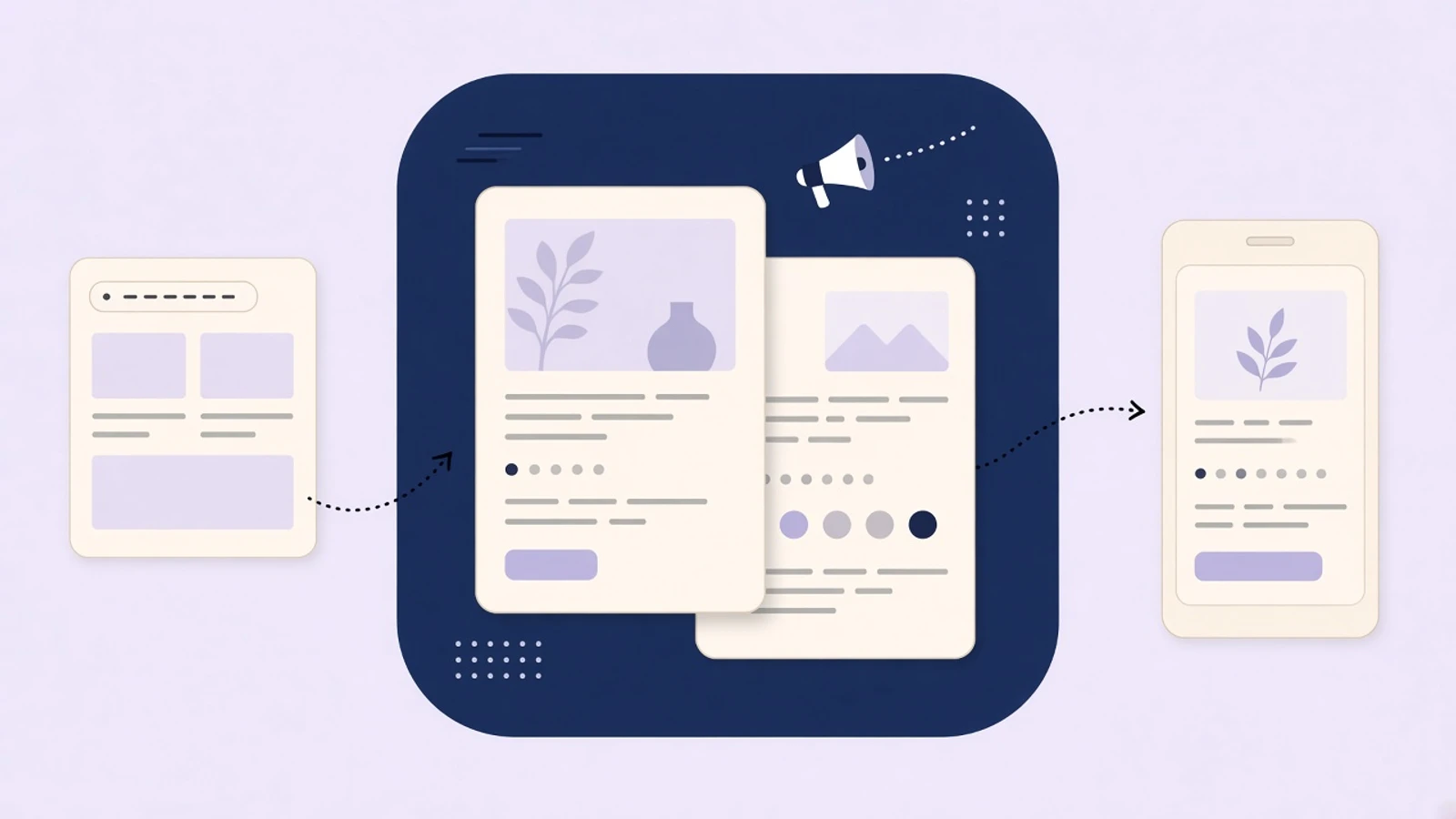
You are not making a second app. You are making a second screenshot story and a second promo line, then pointing an ad — or a search keyword — at that URL.
When Search Ads should not use the default page
- The query is a real second job (mileage vs invoicing, kids vs parents, offline vs sync).
- The default screenshot one cannot tell that job without lying.
- You have enough spend that a 1–2 point conversion change is worth a second set.
- You can keep the page truthful after install — the first session still does that job.
If the ad group is brand terms, stay on the default page. If the ad group is a feature people already pay to find, build the page for that feature. Do not clone the default set and recolor the headline. Apple search and Ads both show the first frames at thumbnail size; a tint is not a different promise.
How to wire the page to an ad
Point Apple Search Ads at a Custom Product Page
The page must be approved and set to visible before Ads can use it and before assigned keywords can show it in search.
Name the job, not the campaign
Write one sentence: “This page is for people who searched mileage log.” If you cannot name the job, you do not need a page.
Build a second screenshot set
Recut frames 1–3 around that job. Keep real UI. Export current sizes. See the first three screenshots.
Create the page in App Store Connect
Add screenshots, optional preview, and promotional text that matches the ad. Do not rewrite the app description — you cannot.
Assign keywords if you also want search
Keywords must be unique per page and taken from the latest approved app version. The page is searchable only after it is approved and visible.
Set the Ads destination to the page URL
In Apple Search Ads, choose the Custom Product Page as the product-page destination for the campaign or ad group that bids those terms.
Do not confuse this with Product Page Optimization
Product Page Optimization is an experiment on the default page: icon, screenshots, preview. A Custom Product Page is a durable extra listing with a URL. Ads can use a CPP. Search can use a CPP. PPO tells you which default treatment wins. Use both; do not treat them as the same form. More on the search-only path is in Custom Product Pages as an indie search lever.
CPP and Search Ads questions
What are Custom Product Pages on the App Store?
Extra product pages you can publish beside the default listing — up to 70 — each with its own screenshots, promotional text, preview, and URL. You can share the URL, use it in Apple Ads, and assign keywords so the page appears in search instead of the default listing.
Can I use a Custom Product Page in Apple Search Ads?
Yes. After the page is approved and visible, set it as the product-page destination for the campaign or ad group. The ad still uses your icon and name; the landing screenshots and promo text come from the custom page.
Do Custom Product Pages change my App Store ranking keywords for ads?
Assigned CPP keywords can show that page in App Store search for those terms. Search Ads targeting is a separate bid. Do not assume an ad keyword automatically becomes an organic CPP keyword — assign it if you want the organic slot too.
How many Custom Product Pages can I have?
Apple lets you publish up to 70 additional product pages. You do not need 70. You need one honest page per job that is worth a screenshot set and, if you advertise, an ad group.
Sources, verified 2026-09-19:
Free tools that help here
Top App Store Apps
Track Apple App Store top charts across 30 countries. View top free and paid rankings for ASO research - updated from Apple's public RSS feed.
ASO Character Counter
Count characters for every App Store and Google Play metadata field against exact store limits. Live counts and over-limit warnings - nothing gets truncated at submission.
Screenshot Beautifier
Add polished backgrounds, padding, shadows, and rounded corners to any screenshot in seconds. Perfect for social posts, docs, and portfolios.
A second ad job needs a second screenshot set.
AppGrowthKit turns the same real captures into another captioned, store-sized deck so the invoicing page and the mileage page are not fighting for screenshot one.
Try AppGrowthKit for Free